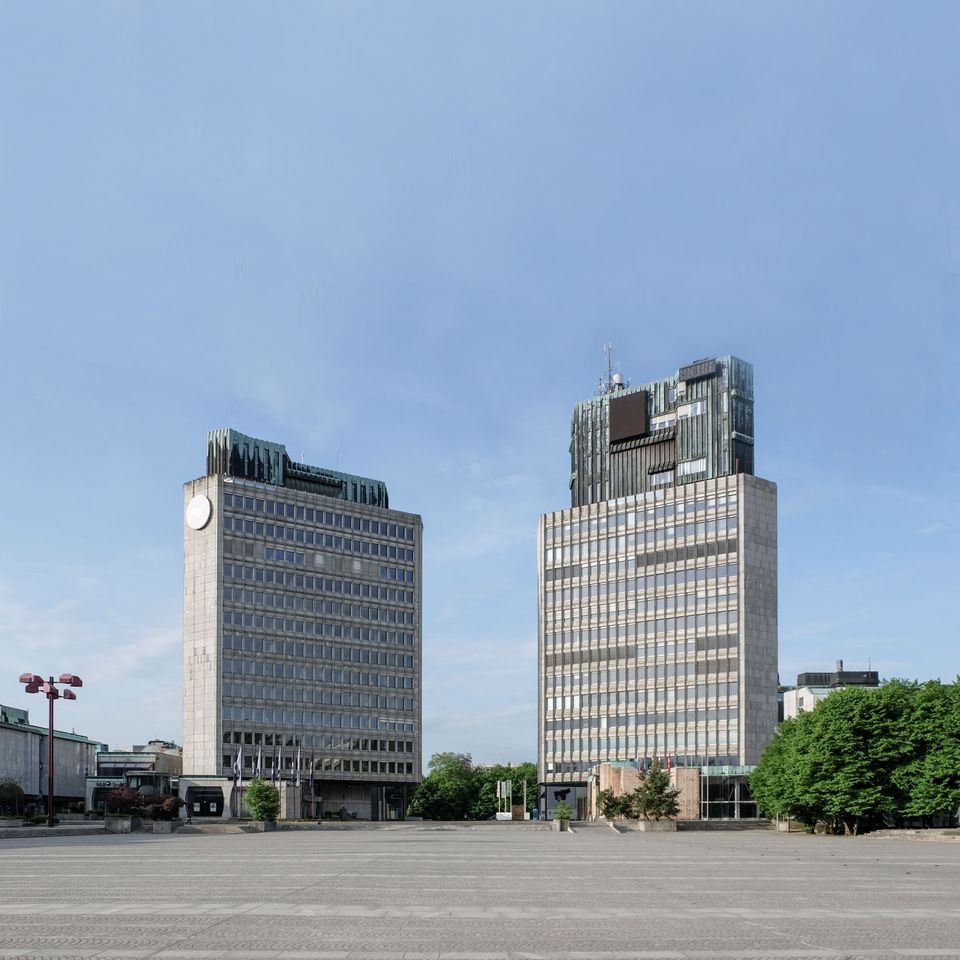
 Revolution Square / Trg republike (1961 — 1974 / 1975 — 1982), Ljubljana, designed by Edvard Ravnikar; Photo — archipicture.eu
Modernist architecture as part of contemporary urban identity
Plečnik and Ravnikar in Ljubljana, and Grabrijan and Neidhardt in SarajevoUrban identity, which distinguishes cities from one another, has been especially contested in recent decades, marked by globalization and homogenization of culture and the built environment. Although the advent of the international style and modern architecture in the early twentieth century embodied powerful universalizing and standardizing forces, there were also more sensitive practices that sought to respond to local contexts. Today, modernist heritage is contested, particularly from the perspective of sustainability, yet it remains important to assess its contribution to the contemporary urban identity of cities, particularly through the works of architectural avant-garde figures. This is particularly compelling in the case of the Western Balkans, especially the capitals of the former Yugoslav republics, which have been shaped by turbulent histories at the crossroads of cultures and further transformed through their shared socialist past and their post-socialist transition. This article examines the cities of Sarajevo and Ljubljana, which were both part of royal Yugoslavia until 1941 and in the second half of the 20th century under Federal People's Republic of Yugoslavia and Socialist Federal Republic of Yugoslavia.
Additional figures and tables
Figure 1:
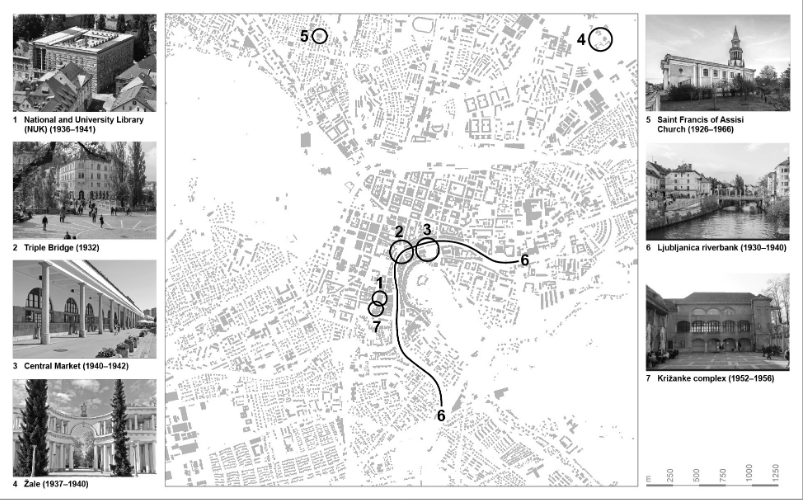
Table 1:
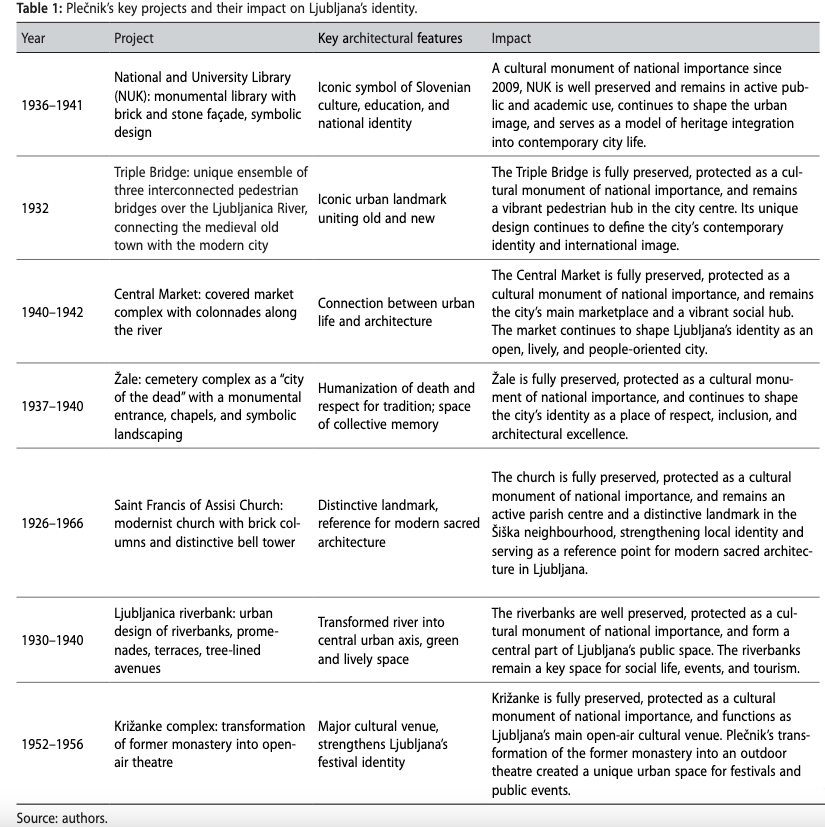
Figure 2:
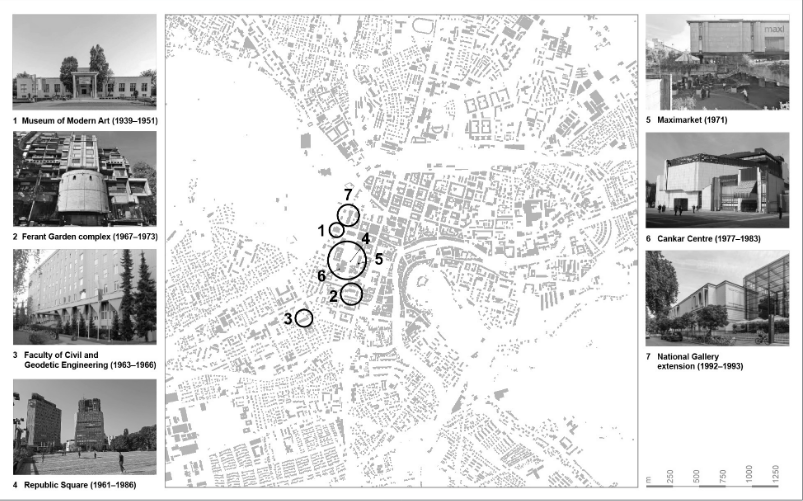
Table 2:
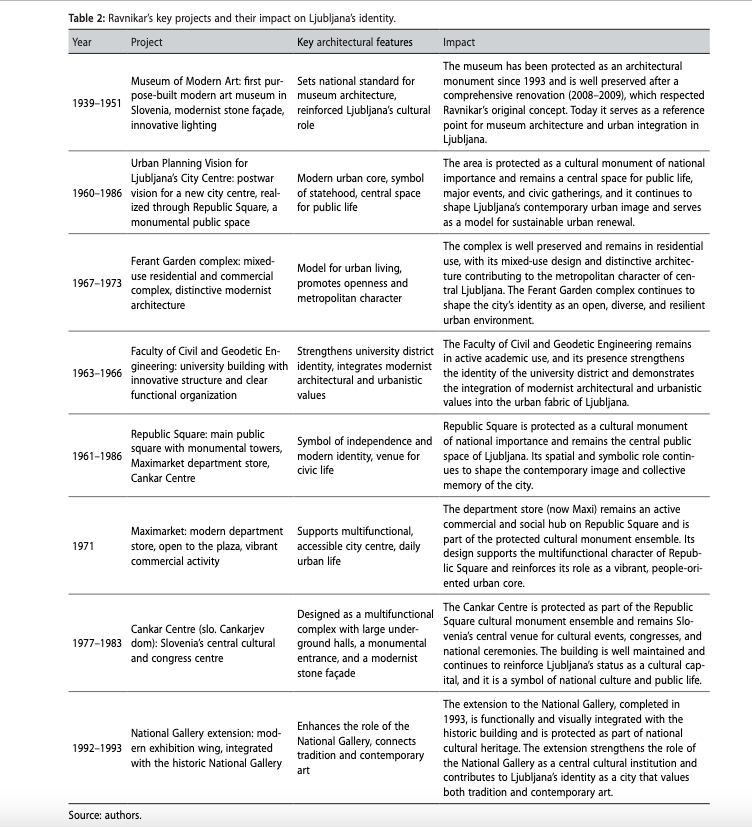
Table 3:
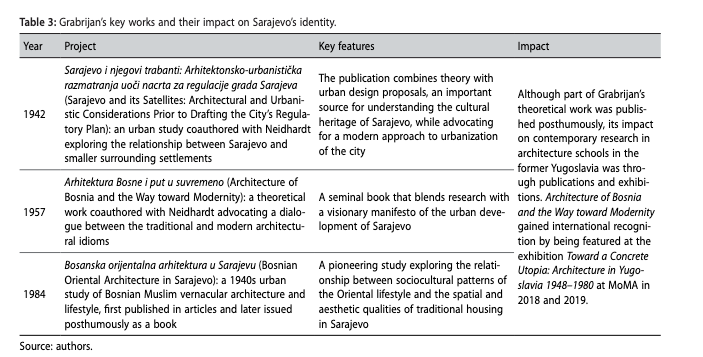
Figure 3:
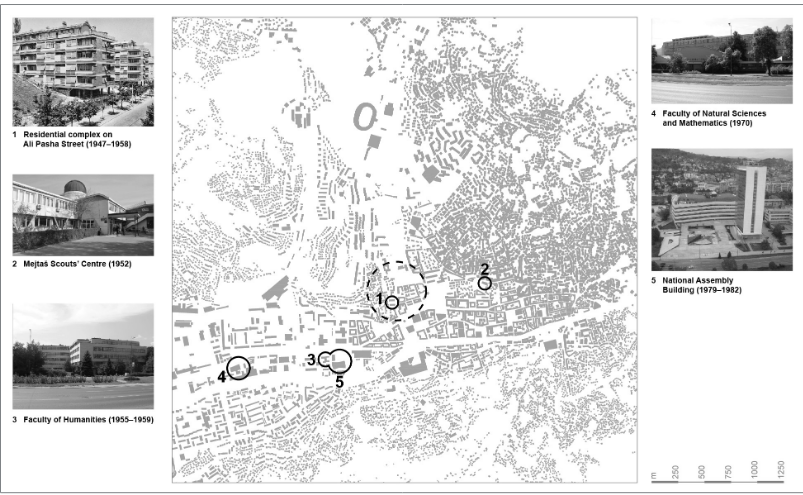
Table 4:
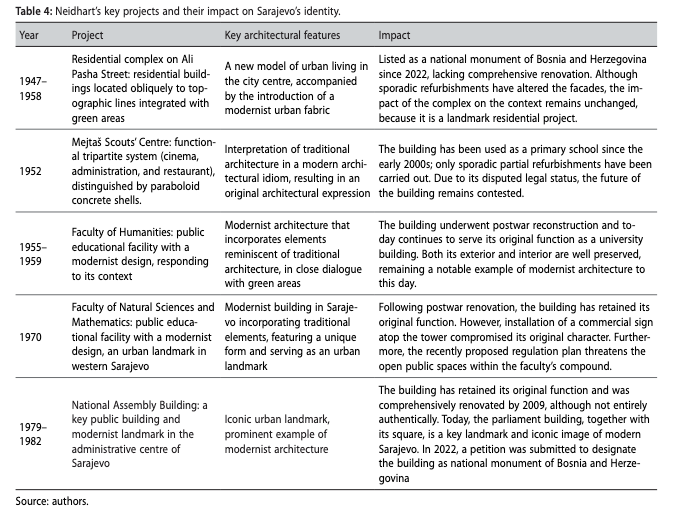
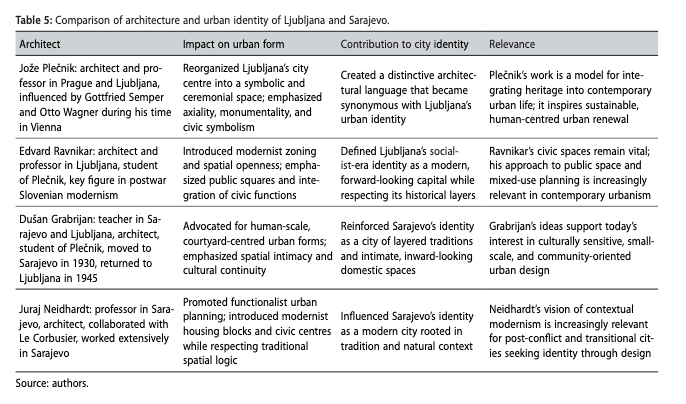
Table 5:
Nermina Zagora is an Associate Professor at the University of Sarajevo, Faculty of Architecture.
Sabina Mujkić is an urban and spatial planner at the Urban planning institute of the Republic of Slovenija, Ljubljana.
Lejla Kahrović-Handžić is an Assistant Professor at the University of Sarajevo, Faculty of Architecture.
Edib Pašić is a teaching assistant at the University of Sarajevo, Faculty of Architecture.